
TheraDesk, a regulated, AI-native healthtech SaaS, built solo
A multi-tenant platform for psychology practices across France and Switzerland, from clinical-workflow design to production Azure infrastructure, delivered end-to-end by a single architect.
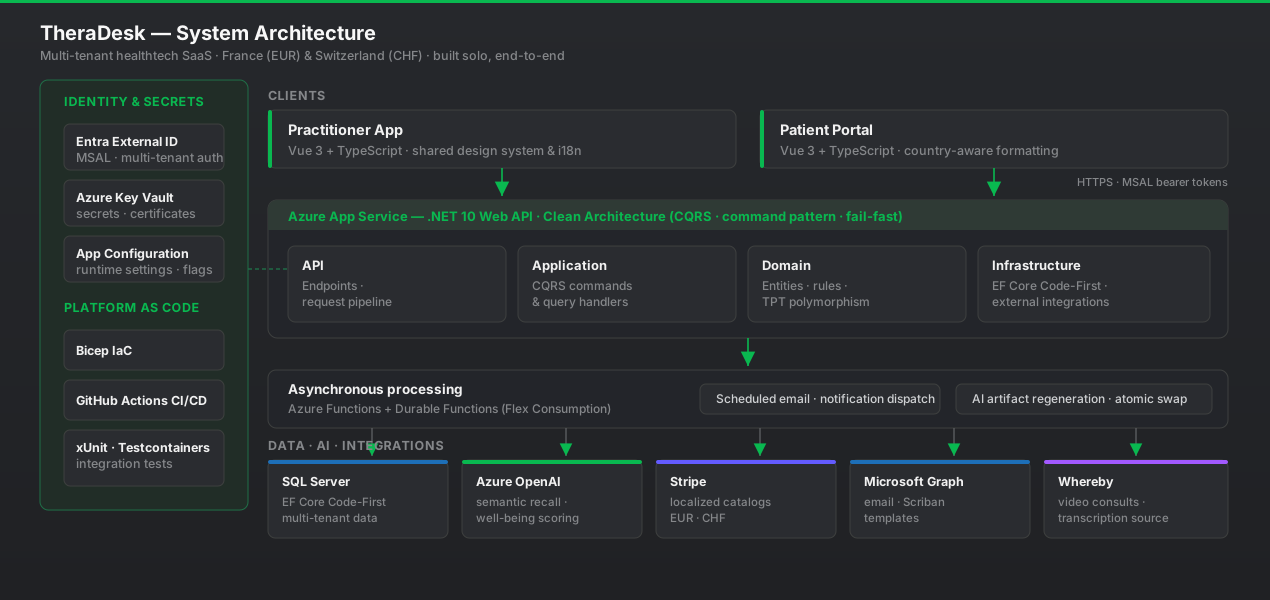
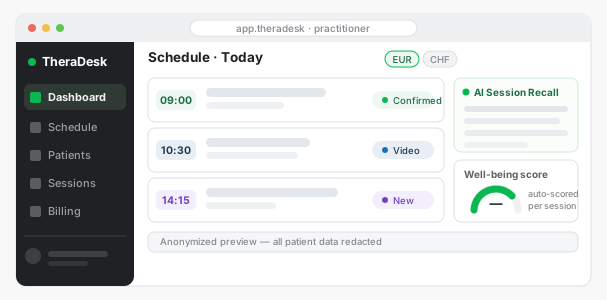
TheraDesk is a multi-tenant SaaS that helps psychology practitioners run their practice end-to-end: patient management, scheduling, virtual consultations, AI-assisted session recall, and automated well-being scoring.
It was designed and built from zero as a single-architect engagement: backend, two frontends, cloud infrastructure, billing, and compliance posture, taken from concept to production across two regulated European markets.
The Challenge
Small practices juggle scheduling, video consultations, notes, billing, and follow-up across disconnected tools, under strict expectations for patient data. The platform had to:
- Handle sensitive clinical data with a defensible compliance posture
- Operate across two countries with different currencies, languages, and pricing
- Add genuine AI value to the clinical workflow rather than novelty
- Remain maintainable and reliable as a long-lived production system run by one person
What was built
Clean Architecture .NET 10 backend
API, Application, Domain, Infrastructure, Azure Functions, using CQRS, the command pattern, and TPT polymorphism, with EF Core Code-First on SQL Server and a strict fail-fast error policy.
AI-assisted clinical workflow on Azure OpenAI
Session transcription via Whereby video, semantic recall across consultation history, automated well-being scoring, and a continuously-available patient artifacts system with atomic swaps during regeneration.
Two Vue 3 + TypeScript frontends
Practitioner app and patient portal sharing one API, design system, and i18n layer; MSAL authentication; country-aware formatting; zero-warning build gates.
Entire Azure platform as code with Bicep
App Service, Azure Functions and Durable Functions (Flex Consumption), App Configuration, Key Vault, SQL, and Entra External ID.
Multi-country commerce on Stripe
Localized catalogs, plan/price modeling, and activation-code-based subscription provisioning across EUR and CHF.
Unified communications
Microsoft Graph email (Scriban templates, scheduled async send), in-app messaging, and a notification dispatch system.
Engineering standards for longevity
Gitflow, xUnit + Testcontainers integration tests, CQRS and polymorphism standards, and GitHub Actions CI/CD to multiple Azure environments.
From idea to production
"Production-grade" meant something concrete here: the entire Azure platform described as infrastructure as code in Bicep; CI/CD through GitHub Actions to multiple environments with automated tests as build gates; authentication on Entra External ID rather than hand-rolled login; secrets and certificates in Key Vault; multi-country Stripe billing across EUR and CHF; regulated health-data handling with a defensible compliance posture; and monitoring with AI cost tracing so spend and model usage stay measurable.
This is the same path an MVP-to-Production engagement follows, the difference being that a client arrives with a prototype already winning users, and the hardening happens in prioritized stages while the product keeps shipping.
→explore MVP to Production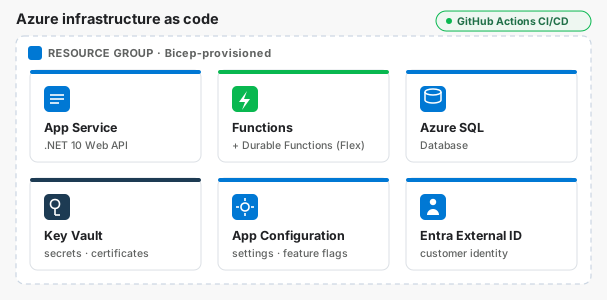
Delivered end-to-end, solo
Architecture, backend, two frontends, cloud infrastructure, billing, and compliance, taken from concept to production across two regulated European markets by a single architect.
“This engagement is the clearest demonstration of what Imhauser Technologies brings to client work: taking a regulated, AI-driven product from architecture to production without a team, the same senior judgment applied to AI integration, private-LLM, and Azure engagements for organizations that handle sensitive data.”
Tell us what you need. We reply within 24 hours.
Imhauser Technologies
McLean, VA
United States
Available on-site across the DC metro, Tysons, Reston, Arlington, and Washington, DC, as well as hybrid and remote worldwide.